
15 years Later: Q&A with Raleigh City Farm's Founders

A view of the vacant lot from Franklin Street in 2011.
Fifteen years ago, Raleigh City Farm’s founders stood on a vacant lot on Person Street imagining what an urban farm in Raleigh could become. Today, we live in different cities and life has expanded in all the ways it does over a decade and a half. Recently, the founders reconnected to reflect on Raleigh City Farm’s beginnings, the big ideas and scrappy decisions, the rezoning challenges, Kickstarter fundraiser, and the collective community effort that transformed an empty lot into a working urban farm.
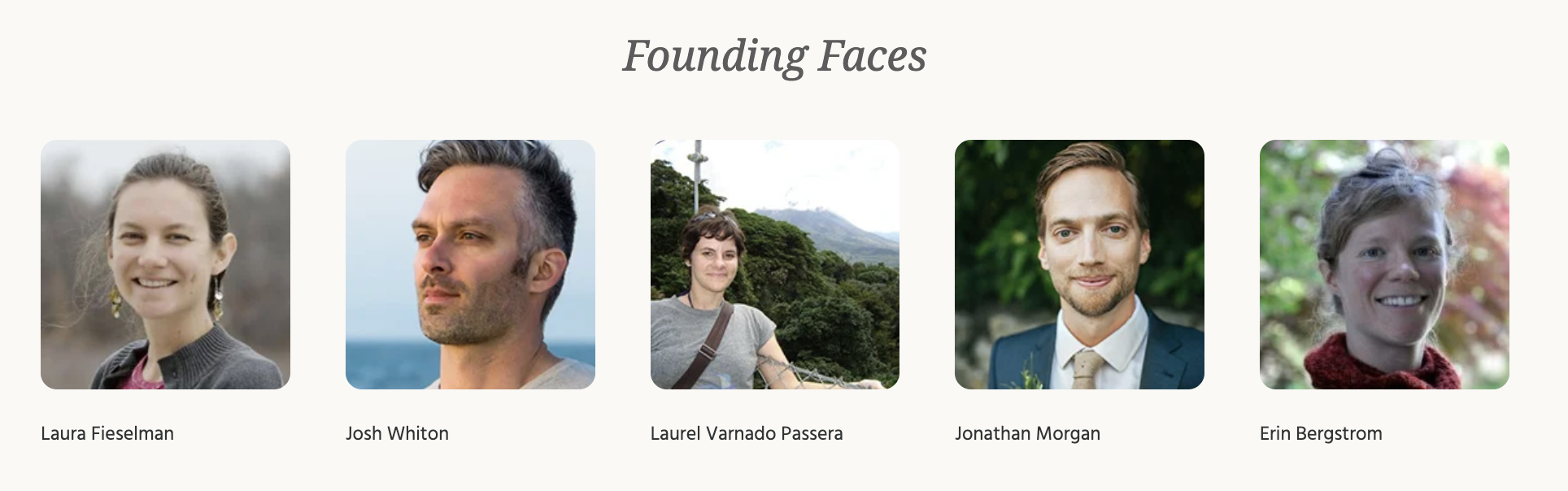
Q: Where were you personally when we started exploring a farm?
Erin: I worked at Passage Home on affordable housing development and was generally very interested in small business development, social entrepreneurship, and contributing to the local food movement. I remember loving the early brainstorming –, imagining what the farm could be –, and meeting neighbors around the site. There was a pastor from a nearby church who shared homemade ice cream with us. Those early community connections felt meaningful.
Laurel: Laura and I met as fellows in the Environmental Leadership Program (ELP). In fact, we started ideating on a project (that would become RCF!) during a road trip we took to Tennessee for an ELP weekend retreat. I was also in the early days of my career in solar energy and hadn’t lived in Raleigh very long at that point, maybe under two years. I was just trying to meet people and learn about my new city, after spending the past few years in West Africa with the Peace Corps.
Laura: I was working as Meredith College’s first sustainability officer. In a prior gig, I had managed a campus farm for another university, and had worked on learning farms and gardens around the world. I had big dreams about implementing educational farming lessons learned in Raleigh…
Josh: I was running a tech startup but had started a community garden at my apartment in Raleigh, which was going well. I realized an urban farm was different than a community garden in subtle and not so subtle ways and soon believed that every city needed one. I began traveling the country visiting every urban farm I could (there weren’t many) to see how they operated. But it was really a fairly new concept at the time that everyone was just figuring out as they went.
Q: When you think back to the early days, what do you remember most?
Laura: I remember how many different models we considered before landing on what became Raleigh City Farm. We talked about rooftop gardens, intensive urban agriculture, indoor hydroponic systems, and community gardens. We even visited someone growing mushrooms in a tractor trailer. At one point, we discussed being aggregators for backyard growers, essentially a distributed farm model.
In the end, we landed on an urban farm in part because John Holmes from Hobby Properties was willing to lease us the land (thanks, John!). But it was also more than that. We wanted to build something visible and tangible in the city. Dig where you live!
(Credit to my mom, Catherine Fieselman, for coming up with the world’s best urban farm tagline - thanks, Mom!)
Laurel: I remember we would meet and cook together most every Saturday. We made biscuits once. I think we made mozzarella cheese in my kitchen and ate it with tomatoes and basil from my garden. Looking back on it, we were building a life-long friendship alongside the farm.
I also often think about how everyone took on a different piece of the puzzle. And we had a lot of puzzle pieces - rezoning the land, community engagement, IRS forms, liability insurance, leasing arrangements, fundraising…It seems like a lot in retrospect but we all worked together really well, we all carried water and, most importantly, we had so much help from the surrounding community.
Josh: I remember seeing the lot, seemingly abandoned and full of rubble, and hallucinating a thriving urban farm right there. I remember bringing in at least one “real” farmer and asking if they’d like being involved and him thinking it was crazy, saying, “This is the worst, most expensive farmland there is.” I remember finding out that the owner of the lot and the neighbors were not in agreement about the future of that lot, and telling the owner (John) that if he let us do the farm there it would end the conflict with the neighbors and revitalize his shopping-center next-door with fresh, aligned tenants. I said that confidently but secretly hoped it would be true. And within a few months of getting the lot and announcing Raleigh City Farm, he was indeed fully subscribed with new tenants who wanted to be based there near the farm! Phew!
Q: What was the hardest part of getting the farm off the ground?
Laura: Rezoning the land. City Council had to approve to allow agriculture on the site. At the time, rezoning a block of urban Raleigh felt impossibly hard. When I didn’t know where to start,Andy Petesch helped (thanks, Andy!) it was a steep learning curve.
Looking back, though, I think the hardest part was really owning it, recognizing that we were creating something that would require long-term nurturing and responsibility.
Laurel: For me, it was the moment when things became financially real. We realized we had to pay property taxes to Hobby Properties. Suddenly it wasn’t just an idea, we had an obligation. We had to figure out how to generate revenue. That’s when the Kickstarter campaign came in. And the fundraising video!
Laura: I also remember the moment I realized, no one else is going to start an urban farm in Raleigh. If we want one, we have to build it. I realized we were just as qualified as anyone else to build it. So we did it!
Josh: Hardest part I remember was figuring out how to proceed after getting the land. There were many conflicting ideas. I remember a big design charette at one point where everyone from the community put in ideas for what to do with the land. By the end of it, after everyone’s comments, visions, and dreams were incorporated, we were looking at something that probably needed $3M dollars and another year of permitting to do (compared to our budget of almost zero dollars). I remember saying, “Hey everyone, that looks amazing but in the meantime, we probably just need to pour a literal ton of dirt on the ground on top of the concrete and start planting seeds.” Somehow, Novozymes heard about our need, brought in a massive semi-trailer of soil, and that’s what we did. When a few weeks later that huge truck backed in and dumped this huge pile of soil, I remember thinking, “Wow I really, really hope we’re right about this.”
Q: What stands out as especially positive from those early years?
Laura: It was overwhelmingly positive. We met so many people. We went to CAC meetings in the surrounding neighborhoods. When we were going through rezoning, one of the neighborhood groups came to City Council and said they had voted unanimously in favor of Raleigh City Farm. They made a point of saying they never vote unanimously, but they did for this. That kind of support mattered.
Erin: It was also powerful to see the economic development ripple effects. The lot had been empty, next to a mostly vacant commercial building. Not long after the farm began, the entire corridor started to come to life, amidst the recession, no less.
I remember hearing Hobby Properties talk about how they believed that leasing the land to us at cost might eventually bring activity and businesses to the strip. That hypothesis proved right. When you draw people to a place, they support other nearby businesses.
Laurel: For sure, today, that stretch includes some fantastic shops: Two Roosters, Standard Beer and Food, Wine Authorities, Edge of Urge, Yellow Dog Bakery, and Person Street Bar, all of whom are really great supporters of the farm. In a sense, the farm became part of a much bigger story about neighborhood revitalization.
Josh: It was the stuff of movies to see the vision for the farm come in and bring peace to the fate of that block. The developer wanted to do a mixed-use building, the neighbors didn’t, and there was a bit of a stalemate. It was relatively easy to unify everyone around the new idea — at least once we assured them that a “farm” didn’t mean roosters and goats running around and standing on top of their cars.
Q: What does Raleigh City Farm represent now that we couldn’t have fully imagined then?
Laurel: I never imagined the impact Raleigh City Farm would have on the city as a whole. Restaurants have highlighted RCF produce on their menus. We’ve built partnerships with non-profits across Raleigh and offer food donations. People rely on the Farmstand for fresh food. The City has recognized the farm with environmental awards. It’s become an established and integral part of the community in ways I never could have predicted.
My 12 year old daughter told me a story recently that brought that home. She was talking with a friend at school about the farm and asked if she’d heard of it. Her friend just opened her jacket to reveal a Raleigh City Farm T-shirt she happened to be wearing. How funny is that?
Josh: I couldn’t have imagined so many talented people would come on to carry the torch so long, and so successfully, after much of the original team moved on. When I see the state of the farm now compared to our humble beginnings I am in awe.
Laura: As RCF continues to thrive, I continue to be delighted in how the organization grows and evolves. Shoutout to the many hands, and wonderful leaders (thank you, Lisa!), who keep the vision alive.
Q: What did those early years teach you that you still carry with you today?
Laura: If you build it they will come! Dreaming up and building Raleigh City Farm taught me the power of (social) entrepreneurship, alongside many leadership lessons.
Laurel: I learned more from that experience than I could have anticipated, lessons I’ve carried with me ever since. The biggest one is not to be afraid to think big. When you share ambitious ideas with people you trust, something shifts. Big, abstract concepts start to take shape. They get challenged, refined, broken down into real steps. What once felt distant becomes achievable and much more concrete.
Josh: Starting the farm reminded me what can happen when a team moves forward with conviction on a shared vision. All we really knew was that growing a ton of veggies in the middle of a city, in plain sight of people, with opportunities for them to dig in and put fresh food in their bellies, would do our local food system a world of good. We had to figure out all the details along the way, overcome a hundred obstacles, and to all of our surprise, we did.